
When you buy through links on our site, we may earn an affiliate commission. Learn more
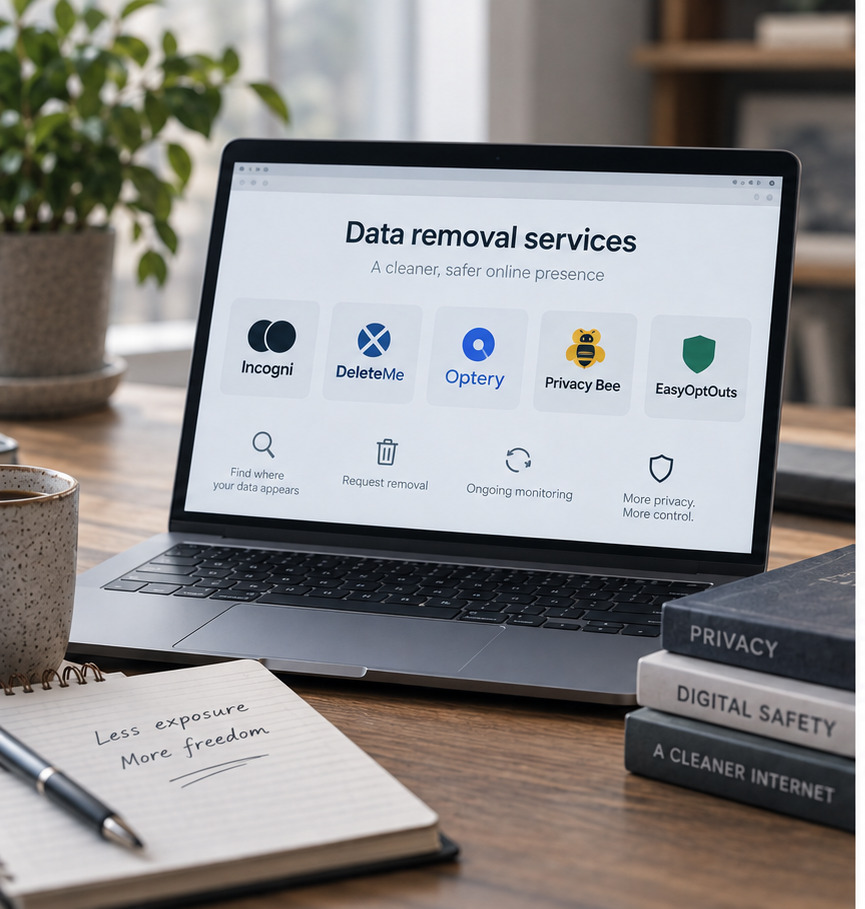
Most people don't start comparing data-removal services because they're interested in the data-broker industry. They start because they've found their home address, phone number, relatives or other personal information somewhere they didn't expect it to be, removed a few records manually and realised there may be a lot more of the same job ahead.
You can do plenty of that work yourself for free, and I wouldn't pay for a service simply because its marketing makes manual removal sound impossible. What a good removal service buys you is time: finding exposures across a much larger number of brokers, sending and tracking requests, checking whether records disappear and repeating the work when they come back.
That has become more important as AI makes exposed personal information easier to use. A phone number, employer, old address and family connection can be pulled together faster and turned into a much more convincing phishing or impersonation attempt. Removal won't make you invisible, and it can't recover information already stolen in a breach, but reducing easy-to-find personal data gives someone less material to work with.

These are the five services I would shortlist first, depending on your country and the kind of help you need. Their strengths differ, so use the best-for descriptions to find the closest fit before comparing the plans below.
Country support is the first filter. Then decide whether you want routine automation, visible evidence, adviser-led help or broader identity protection. The nine services below keep those different needs in view.


A data removal service helps you reduce personal information held or displayed by covered data brokers and people-search sites. Those businesses can assemble profiles from multiple sources, so a name, address or contact detail may appear in more than one place. The service gives you a way to delegate requests rather than work through every supported site yourself.
The source of the information matters. A broker profile, a search result linking to it, an account you created and an official public record are different targets. A service that removes a covered profile does not automatically remove the original record or every cached or copied version. Understanding that distinction helps you set a useful goal: reduce specific exposure and maintain the clean-up.
The usual stages are looking for matching information, submitting requests, tracking responses and checking again. Providers differ in how much they show you, which sites they cover and where automated requests are supplemented by people. A free scan may help locate public matches, but it should not be mistaken for a complete audit or a paid removal subscription.
Start by checking what is publicly visible about you. Matching also needs care. A common name can return someone else’s profile, while older addresses or variations can connect to yours. Check the details available in a report rather than assuming every match is correct. When a provider asks for authorisation or verification, understand why it is needed and which tasks still require action from you.
The outcome labels are just as important as the workflow. Request sent, case closed and profile verified as removed are different states. Recurring services add later checks and follow-up when data returns, but they cannot guarantee the removal of every public record, third-party copy or stolen breach file.
A subscription becomes useful when the number of listings, verification messages and repeat checks is more work than you want to manage. It can save time for someone with a long address history or repeated appearances across supported sites. If you have only a few relevant listings, our free people-search opt-out guide may be enough.
Public-facing work or persistent unwanted contact can make exposed details more consequential. In those situations, look for a service whose actual sources and support fit the problem, and keep a list of important URLs. Avoid buying the largest headline broker count without checking whether it includes the exposure that matters to you.
Removal is also one part of wider privacy maintenance. Changing how you share contact details, securing accounts after a breach and addressing source records can remain necessary. A useful service reduces a defined burden; it does not make you unfindable or remove the need for those separate actions.
Start with country support, then compare the evidence, maintenance and help each service provides. The first table shows where each option fits; the second covers prices and billing terms. On smaller screens, swipe to see the remaining columns.
| Service | Best for | Regional fit | Evidence / maintenance / help | Main limitation |
|---|---|---|---|---|
| Incogni | Recurring international automation | UK and supported international markets | Recurring requests; Unlimited custom work | Custom URLs need Unlimited |
| Aura | Removal plus identity / fraud tools | Eligible US readers | Removal with credit alerts and recovery support | Bundle value depends on using wider tools |
| Optery | See exposure before paying | Not UK; supported countries listed below | Free Basic report; higher-tier evidence / human help | Features and reach depend on tier |
| DeleteMe | Adviser-led removal and reports | US / UK / selected international markets | Free scan; managed support and ongoing reports | Some sources require a manual hand-off |
| Privacy Bee | Broader / custom clean-up | Global advertised; local scope varies | Pro+ custom requests and analyst help | Essentials is narrower; closed ≠ deleted |
| Cloaked | Removal and masked contact details | US / Canada; feature eligibility varies | Email / phone aliases alongside removal | Aliases do not erase old breaches |
| Kanary | Persistent / complex exposure | Core US-only; Advanced: confirm | Advanced social / AI-LLM / complex mitigation | Higher fee; configurations can add cost |
| OneRep | US household automation | US-focused | Free scan / trial; recurring opt-outs; Pro custom | Dated governance disclosure; see review below |
| EasyOptOuts | Small removal budget | Current or recent US residents only | Automated opt-outs; three scans/year | Periodic cadence; no family plan |
Compare the billed total and the features included in that tier. Trials and refund guarantees have different conditions, so check the terms for your country and purchase route.
| Provider | US price | UK price | Availability | Upgrade / household detail | Trial / refund detail |
|---|---|---|---|---|---|
| Incogni | Try Standard: ≈$7.99/mo* | Try Standard: ≈£5.99/mo* | US, UK, Canada and supported Europe; tier restrictions apply | US Unlimited: ≈$14.99/mo*; UK Unlimited: ≈£10.99/mo* | 30 days from sign-up |
| Aura | Try Individual: ≈$12.00/mo* | Not available in the UK | US identity/credit protection; Canadian services vary | Wider identity / credit eligibility applies | 14-day trial; eligible annual direct guarantee |
| Optery | Try Core: ≈$3.25/mo* | Not available in the UK | US, Canada excluding Quebec, Australia, New Zealand, South Africa | Extended: ≈$12.42/mo*; Ultimate: ≈$20.75/mo* | Free Basic; initial 30-day conditions |
| DeleteMe | ≈$10.75/mo*; one person | ≈£9.58/mo*; one person | US, UK and selected international countries; country-specific pricing | Country-specific pricing; US / UK one-person annual plans shown | Full refund before first report; prorated after |
| Privacy Bee | Essentials: ≈$8.00/mo* | UK served; billed in USD; no GBP price verified | Global availability advertised, subject to exclusions and local scope | Pro: ≈$16.42/mo*; Signature: ≈$66.58/mo* | Initial Essentials/Pro guarantee exclusions |
| Cloaked | Individual: ≈$10.00/mo* | Not available in the UK | US / Canada; feature eligibility varies | Couple / family plans available | Check geography and alias-use exclusions |
| Kanary | Core: ≈$20.83/mo* | Core: not available in the UK; Advanced: country-specific eligibility/quote unverified | Core US-only; Advanced: confirm country and case suitability | Advanced: ≈$41.67/mo*; configurations may add cost | Monthly quote / general refund: not certified |
| OneRep | Try Individual: ≈$8.33/mo* | No UK offer or GBP price verified | US-focused; confirm any non-US eligibility directly | Family: ≈$15.00/mo* | Free scan / five-day trial; initial 30 days |
| EasyOptOuts | ≈$1.67/mo* | Not available for UK-only residents | Current or recent US residents only | No family plan | 150-day guarantee |
*Monthly equivalents are based on annual plans, billed annually. ≈ indicates an approximate monthly equivalent, rounded to the nearest penny or cent; these are not monthly-payment prices. See the full reviews for annual billed totals and monthly-payment options.
Price check: 2 October 2026. Tax, promotions, checkout totals and renewal terms may differ; confirm the provider’s current terms. UK amounts are provider-published GBP prices, not currency conversions. Availability is checked separately from currency; VAT/sales tax may apply.
Incogni is my starting recommendation for recurring broker clean-up with little routine admin, in supported countries. Its support for the UK, US, Canada and selected European countries makes it useful to readers who cannot enrol in many US-focused removal services. The main reason to choose it is an ongoing process that you can delegate, rather than a one-off search for your name.
That positioning matters when comparing it with Aura and Optery. Aura adds wider identity and fraud tools for eligible US readers; Optery emphasises seeing exposure before paying in its supported markets. Incogni is the more natural starting point here for a UK reader whose immediate priority is maintaining broker requests without buying a wider security bundle.
I would choose the plan around the exposures I actually need handled. Standard covers the listed brokers, while Unlimited adds custom requests beyond that list. Someone dealing with ordinary covered profiles may not need the upgrade; someone with unusual pages should check that the custom-removal route fits those pages before committing. Neither plan replaces separate action on Google results or UK public sources.
What I liked:
What can be improved:
The service details: Incogni’s documented service centres on broker requests and recurring follow-up. Use its covered list to distinguish the sites the subscription handles from your separate clean-up tasks. Its estimates that individual brokers may respond within hours or take weeks are provider guidance, not a DSS-measured completion time. If a profile remains visible, track the specific URL and its status rather than treating the total request count as a personal success rate.
Plan metrics: Regions [UK / US / Canada / supported Europe] | Coverage [420+ listed brokers, provider claim] | Maintenance [Recurring] | Custom requests [Unlimited] | Refund [30-day sign-up guarantee]
Plans and terms: In the US, Standard is $95.88/year or $15.98 monthly and Unlimited is $179.88/year. In the UK, Standard is £71.88/year or £11.98 monthly and Unlimited is £131.88/year. These are the provider’s public local-currency prices; VAT/sales tax and offers may affect checkout. Incogni advertises a 30-day money-back guarantee from sign-up.
Read my Incogni Review for the request checks, reporting limits and plan comparison. If you’re weighing another service, compare my Incogni alternatives.


Aura belongs near the top when your concern is broader than an exposed broker profile. Eligible US readers get privacy clean-up alongside identity alerts, three-bureau credit monitoring and recovery support. I would shortlist it for someone who wants help watching for misuse as well as reducing exposure.
The value is in the combined protection. Buying a removal-only service and then finding that you still want credit monitoring or recovery assistance can lead to several subscriptions. Aura offers a reason to consolidate those needs, provided its eligibility and policy terms actually fit you. This is why it ranks highly here without being presented as the strongest pure removal specialist.
If your only objective is to remove covered listings, compare the specialist options first and decide whether you will use Aura’s additional tools. For a UK reader, the US focus of its identity and credit features changes the decision entirely. A US reader with both privacy and fraud concerns has a much stronger reason to choose the bundle.
What I liked:
What can be improved:
The service details: Aura advertises 425+ removal sources, but that number describes claimed scope rather than your verified deletion results. Review the removal information separately from identity or credit alerts: an alert about possible misuse does not demonstrate that a broker profile has been removed. When judging the subscription, ask whether both parts of the bundle solve a need you have, rather than using the number of bundled features as a removal-performance score.
Plan metrics: Region [Eligible US readers] | Coverage [425+ sources, provider claim] | Wider tools [Identity / credit / recovery] | Trial [14 days] | Refund [Eligible initial annual direct purchases: 60 days]
Plans and terms: In the US, Individual is $12/month billed annually ($144/year) or $15 billed monthly. It is not available in the UK; Canadian service eligibility and features differ. Aura advertises a 14-day trial and 425+ removal sources. Its 60-day guarantee applies to eligible initial annual purchases directly through Aura, excluding Amazon.

DeleteMe is a strong fit if you want an adviser-led service and regular reporting rather than managing an automated dashboard alone. Its appeal is the ongoing work and support around removal, particularly for someone who wants a more managed relationship with the provider.
I would compare it with Incogni on the kind of help you value. Incogni is the starting point here for straightforward recurring automation in supported international markets; DeleteMe is worth a closer look when privacy advisers and reports are central to the purchase. The right choice depends on what you expect the service to handle and what you are willing to complete yourself.
International enrolment needs a country-specific check. Its public US annual plan costs $129 for one person; selecting the UK in its international checkout shows £115 for one person for a year. These are country-specific offers, so check their coverage and renewal terms rather than treating either price as universal. Its documented PeopleConnect limitation also shows why a managed service can still involve a manual hand-off.
What I liked:
What can be improved:
The service details: DeleteMe’s PeopleConnect guidance is a useful example of a documented manual hand-off. Delegating removal does not override a site’s requirement for a request from the individual. Keep a record of which cases the service can pursue and which actions it asks you to take. Judge the reports by the information they give about particular exposures, not just the volume of activity. Country-specific plan details remain important because international availability alone does not establish identical scope.
Plan metrics: Regions [US / selected international markets; UK publicly listed] | Free scan [Separate] | Model [Managed / privacy advisers / ongoing reports] | Refund [Before first report: full; afterwards: prorated policy]
Plans and terms: Country-specific pricing applies. The US one-person plan is $129/year, while the UK checkout shows £115/year for one person. Those public prices were checked without completing an enrolment; confirm the final checkout and renewal terms. The refund policy distinguishes full refunds before the first report from prorated refunds afterwards.

Privacy Bee makes sense when your clean-up extends beyond ordinary public people-search profiles. Pro and higher plans offer broader broker categories and custom-site requests with analyst support. I would consider it when a standard list misses the exposures that motivated the purchase.
The plan distinction is central to its value. Essentials focuses on people-search sites and affiliates; Pro expands the scope. A reader with a few ordinary listings should compare that lower tier with cheaper services, while someone collecting unusual URLs has a clearer reason to investigate the custom-request route.
I would be careful about interpreting both geography and reporting. Privacy Bee advertises global availability, but local sources differ. A case marked closed is not automatically a verified deletion. Ask what the service can do for the specific exposure in your country and what its status labels mean before treating the higher price as broader protection for you.
What I liked:
What can be improved:
The service details: The service detail to resolve before paying is the scope of a custom request and the evidence attached to its outcome. Identify the URL, why it matters and whether the selected plan accepts it. Separately, ask whether a closed case reflects removal, suppression, a response or a case the service cannot pursue. These are reporting questions rather than claims that DSS has inspected Privacy Bee’s internal workflow or measured its success rate.
Plan metrics: Availability [Global advertised; local scope varies] | Essentials [People-search / affiliates] | Pro+ [Broader categories / custom requests / analyst help] | Starting equivalent [About $8/month annually]
Plans and terms: The verified one-person annual checkout totals are $96 Essentials ($8.00/mo equivalent), $197 Pro ($16.42/mo equivalent) and $799 Signature ($66.58/mo equivalent), all billed annually in USD. Privacy Bee advertises UK and broader international availability, but no separate GBP price was verified; do not treat these US-dollar figures as a UK-local quote. The monthly equivalents are rounded comparisons, not monthly-payment options; checkout totals can vary by license count, term and offers. The initial Essentials/Pro guarantee excludes Signature and some partner arrangements; check the plan terms.

Cloaked is particularly useful if your real email or phone number has become connected to too many parts of your life. Its masked contact tools give you a way to change future sharing habits while removal tackles existing exposures. That combination is its distinctive reason for inclusion here.
I would choose it over a removal-only service when I wanted both clean-up and a different way to sign up for services. Aliases can reduce future links to your real contact details; they are useful alongside removal because a subscription alone does not change what you share next. They do not erase information already leaked or guarantee that existing accounts stop being linked.
Check the plan and geography carefully. Cloaked lists US and Canadian availability, with feature eligibility varying, and offers individual, couple and family plans. If you only need removal, compare that cost with a specialist. If several people also want masked contact tools, examine the household plan rather than multiplying the individual price.
What I liked:
What can be improved:
The service details: Assess the removal and alias features separately. For removal, check the covered sources and the record of requests or outcomes. For aliases, decide which future sign-ups should use masked details and whether you will maintain that habit. We do not claim that masked contact tools recall breached data. Keeping the two jobs separate makes it easier to judge whether Cloaked’s combined subscription earns its cost for your situation.
Plan metrics: Regions [US / Canada; feature eligibility varies] | Coverage [1,000+ sites, provider claim] | Contact masking [Email / phone aliases] | Household options [Individual / couple / family]
Plans and terms: In the US, Individual is $14.99 monthly or $119.99 yearly. Cloaked currently lists US and Canadian availability, with feature eligibility varying; it is not available in the UK. Couple and family plans are available. Read the cancellation and refund terms, including geography and alias-use exclusions, rather than assume a universal refund window.
Kanary is worth considering when exposure is persistent or has a stronger personal-safety dimension. Its ongoing mitigation approach is more relevant to a public-facing person or a complex case than to someone who wants a cheap one-off tidy-up of a few listings.
Core and Advanced should be compared as distinct offers. Advanced extends to social and AI/LLM exposure and complex mitigation; those features should not be attributed to Core. The question is whether you have a specific problem that warrants that scope and support, not whether the longest feature list sounds reassuring.
At the public US-dollar annual prices of $250 for Core and $500 for Advanced, I would seek a clear explanation of country and case suitability before subscribing. Core is US-only, and we have not certified non-US Advanced eligibility, a current monthly quote or a general refund window. That uncertainty matters to a UK reader and to anyone whose decision depends on flexibility.
What I liked:
What can be improved:
The service details: For a complex case, bring specific examples rather than asking for a generic promise to disappear from the internet. Ask which sources the chosen tier can address, what assistance is included, how progress is documented and which configured services add cost. The fact that a provider offers social or AI/LLM mitigation does not mean every third-party copy or model output can be recalled. We have not independently measured those outcomes.
Plan metrics: Region [Core: US only; Advanced: confirm] | Annual account price [Core $250 / Advanced $500] | Advanced scope [Social / AI-LLM / complex mitigation] | Family seats [Advertised 50% off]
Plans and terms: Public US-dollar annual pricing is $250 Core and $500 Advanced per account. Core is not available in the UK; Advanced UK eligibility and any country-specific price remain unverified, so request a local quote rather than assume these amounts apply. Family seats are advertised at 50% off. We have not certified the current monthly quote or a general refund window; confirm both if they affect your decision.

OneRep is a practical option for US households that want recurring people-search clean-up and value family pricing. Its automated requests and follow-ups address the repetition that makes manual removal time-consuming. A household should compare the family plan rather than assuming several individual subscriptions are necessary.
The free scan and five-day trial offer ways to investigate the fit before making a longer commitment. Standard and Pro serve different needs: Pro adds non-public brokers and custom support. I would compare that upgrade with the specific exposures I needed handled, rather than choose it simply because it is the higher tier.
Trust also affects my recommendation. In a March 2024 company statement, founder Dimitri Shelest acknowledged an ownership stake in Nuwber and said there was no information sharing or operational cross-over with OneRep. This dated governance history is relevant to privacy-provider trust without proving the removal technology ineffective. I keep OneRep below the leading recommendations and have not independently confirmed his present ownership.
What I liked:
What can be improved:
The service details: Use the free scan to identify relevant matches, then distinguish an automated request or follow-up from a confirmed removal. Check which sources are included in Standard and what Pro adds before paying for custom support. The governance disclosure belongs in the purchasing decision separately from the technical process: we do not use it as an invented failure score, nor treat a successful request as resolving questions about provider trust.
Plan metrics: Region [US-focused] | Free scan / trial [Available / five days] | Maintenance [Recurring scans / automated follow-up] | Custom support [Pro] | Refund [30 days on initial payment]
Plans and terms: For its US-focused service, Individual is $8.33/mo, billed $99.96 annually, or $14.95/mo on monthly billing; Family is $15.00/mo, billed $180 annually, or $27.95/mo on monthly billing. Individual Pro is $15.95/mo, billed $191.40 annually; Family Pro is $29.95/mo, billed $359.40 annually. No UK offer or GBP price has been verified, so confirm any non-US eligibility directly before subscribing. Pro adds non-public brokers and custom support. A free scan and five-day trial are offered. The 30-day guarantee covers the initial payment, not renewals; confirm the billed total.

EasyOptOuts earns a place here because it makes recurring people-search removal accessible on a small budget. At $19.99 a year for eligible current or recent US residents it is the least expensive paid option in this comparison. That is a strong reason to investigate it when cost is the deciding constraint, without claiming it produces the best overall removal results.
Its focus on high-visibility sites suits a different purchase from Aura’s wider protection or Kanary’s complex mitigation. Someone with ordinary US-focused people-search exposure may prefer paying for that narrower task. Someone needing custom support, household accounts or identity recovery should compare the other services around those requirements.
I would be comfortable with the price only after checking the covered sites and maintenance cadence. Three scans a year provide periodic clean-up, not continuous monitoring. There is no family plan, so the low individual headline price does not automatically settle household value. The provider limits the service to current or recent US residents; it is not available for a UK-only footprint.
What I liked:
What can be improved:
The service details: The buying decision is whether the supported sites and scheduled checks cover enough of your actual problem. Track the relevant listings before and after a scan cycle and keep separate tasks for sources outside the list. A lower subscription price establishes value only if the task fits; it is not evidence of faster or more complete removal. We have not measured comparative success rates for EasyOptOuts or the other providers.
Plan metrics: Focus [US-oriented high-visibility sites] | Coverage [200+ sites, provider claim] | Cadence [Three scans/year] | Family plan [None] | Price / guarantee [$19.99/year / 150 days]
Plans and terms: For eligible current or recent US residents, the personal plan is $19.99/year, with a 150-day money-back guarantee. The provider advertises 200+ high-visibility sites. There is no family plan; check the covered sites against the records you want removed.

Removal reduces public and broker exposure. Identity protection monitors for signs of misuse and can add recovery support. A breach needs password and account-security action even if a removal service is already working on your broker records.
For eligible US readers wanting both, Explore Aura’s wider protection is a natural next step. Compare the broader category in Best Identity Theft Protection Services. UK readers should check a locally available service rather than assume US credit and insurance features transfer.
If the problem is a compromised account, stolen breach data or an official source record, identify that separate action while the removal service handles its covered work. Keep a record of persistent URLs and any provider hand-offs. A privacy subscription is most useful when its role is clear.
For most UK readers, I would start with Incogni. Its recurring broker requests fit the main reason I would pay for removal: keeping up with a job that becomes repetitive. I would still deal separately with 192.com, the open electoral register and any relevant company filings, because a broker subscription cannot replace those source-level choices.
For an eligible US reader who also wants identity alerts, credit monitoring and recovery help, Aura has a different appeal. The wider bundle can make sense when you need those tools together. If removal is your only priority, I would compare the specialists before paying for protection you may already have elsewhere.
If I wanted to see the exposure before choosing a paid plan, I would begin with Optery Free Basic in a supported country. DeleteMe is worth considering when adviser-led support and regular reports matter more, while Privacy Bee merits a closer look when the standard covered list misses unusual exposures.
The choice then depends on the work you actually need handled:
I would make a short list of the records I wanted removed before buying anything. Check that the service covers those sources, understand what its reports can show and keep track of the requests it leaves to you. That gives you a useful basis for deciding whether the subscription is saving enough work to keep at renewal.

For most UK readers, I would start with Incogni for recurring broker clean-up in its supported markets. Aura has a different appeal for eligible US readers who also need identity alerts and recovery help, while Optery suits supported-country readers who want to inspect exposure before paying. Before choosing, compare the actual sources you need removed, the evidence supplied by your tier and any source-level requests you will still have to make yourself.
EasyOptOuts is the cheapest paid service in this comparison at $19.99 a year, for a US-focused service with three scans annually. That low price buys a narrower task rather than continuous monitoring, custom assistance or a family plan, so it is useful only if its covered sites fit your exposure. If you have just a few listings, start with our people-search opt-out guide and compare the work you can do free with the maintenance you would pay to delegate.
A data removal service may remove a covered source page that appears in Google, but it does not automatically remove every search result about you. Google’s eligible personal-information removal routes address search visibility, while deleting or correcting the source remains a separate task. Use our Google information-removal guide to identify the right request, then follow up with the source where the information is still available.
A data removal service generally cannot delete an official public record that must legally remain available. It may address a broker’s copy or listing, but electoral, court and company records have their own rules, and some allow limited suppression or correction rather than complete deletion. Follow our personal-information removal guide to separate broker requests from source-level action, and check the relevant authority’s rules for the particular record.
No service can guarantee that your information will stay removed forever. Brokers can refresh records from other sources, new listings can appear and third-party copies can remain outside a provider’s scope. Keep a record of important URLs and removal dates, check them again after the initial clean-up, and compare recurring follow-up with periodic scans before deciding whether an ongoing subscription earns its cost.
I would weigh OneRep’s dated governance disclosure before choosing it, rather than give an unqualified assurance of trust. In March 2024, founder Dimitri Shelest acknowledged an ownership stake in Nuwber and said there was no information sharing or operational cross-over with OneRep; we have not independently confirmed his present ownership. That history does not prove the removal technology ineffective, but it is relevant when you are sharing identifying information with a privacy provider. Read the disclosure in the OneRep section, check its current privacy terms and compare alternatives if that relationship affects your confidence.
No, data removal and identity theft protection address different parts of the problem. Removal reduces covered public and broker exposure, while identity protection may monitor for misuse and provide recovery assistance; neither can recall stolen breach files or prevent every incident. Compare Best Identity Theft Protection Services if alerts and recovery help matter, check country eligibility, and take separate account-security action if a breach has already exposed you.

Protecting Your Digital World One Step at a Time.
Some pages include affiliate links. We may earn a small commission at no extra cost to you. Our reviews remain unbiased and independent.
Copyright © 2025 | Digital safety squad | All Rights Reserved