



Last Updated on September 19, 2026 by Nick Francis
If there’s immediate danger
If your child is in immediate danger, has been threatened with physical harm, is being blackmailed, has had sexual images shared or threatened, or you’re worried they may hurt themselves, treat it as urgent. In the UK, call 999 if there’s immediate risk, or contact your local police via 101 if it isn’t an emergency.
Use the CEOP Safety Centre if you’re worried about online sexual abuse, grooming, or the way someone has been communicating with your child online. CEOP isn’t for ordinary bullying, fake account or account hacking reports, but it is the right route for sexual abuse and grooming concerns involving children.
In the US, contact local law enforcement or report suspected online child exploitation through the NCMEC CyberTipline. If sexual images of a child are involved, don’t forward, repost or send them to other parents. Get advice from police, CEOP or NCMEC about how to preserve evidence safely.
Signs of Bullying on Social Media
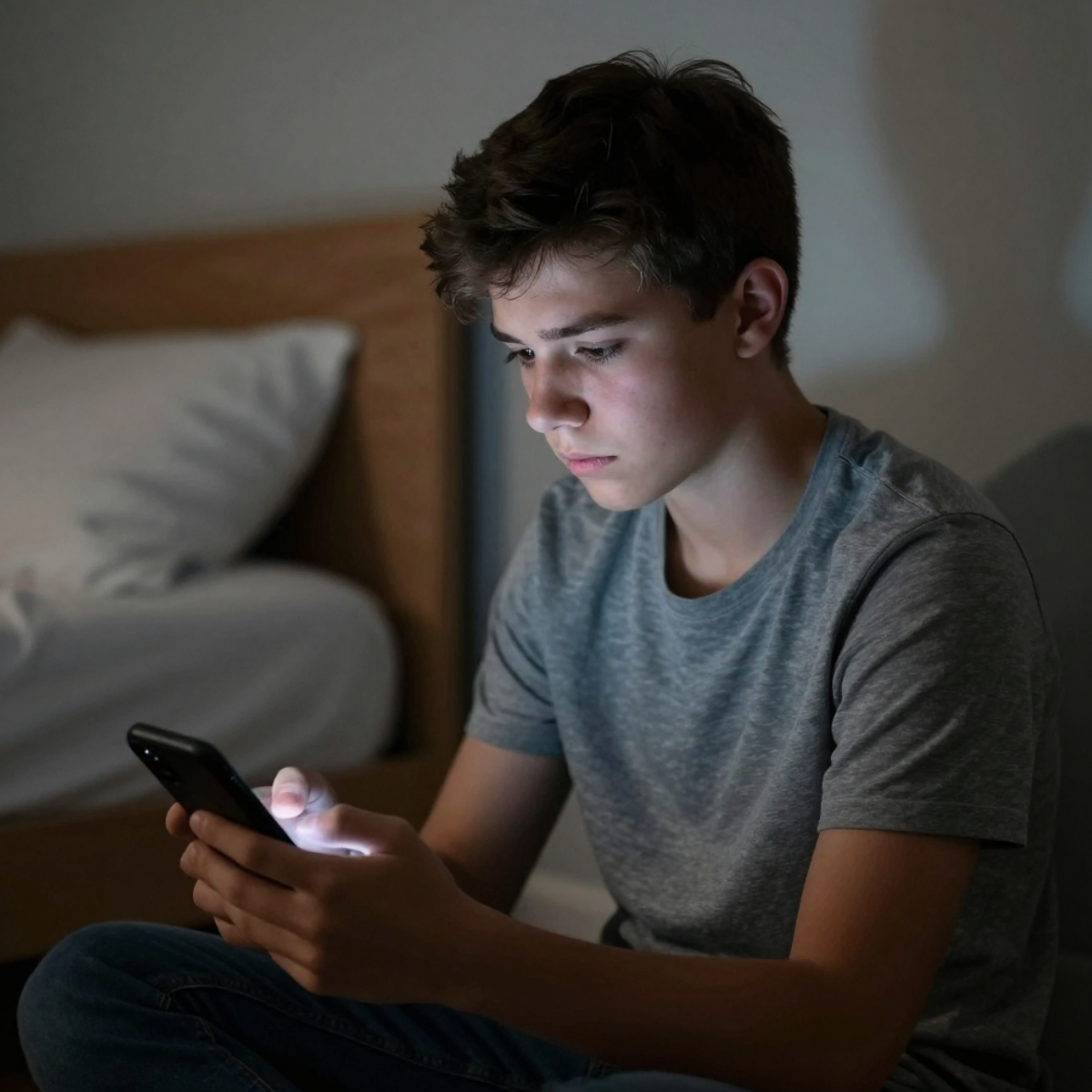
A change in how a child uses their phone is usually the first sign of bullying on social media, because most children don’t disclose it directly. They may feel ashamed, scared of making it worse, or worried you’ll take the phone away at exactly the point they need connection most. Sudden secrecy can also overlap with hidden or secondary social media accounts, especially when the change appears alongside deleted messages or unfamiliar contacts.As a parent, I wouldn’t wait for my child to use the word ‘bullying’ before I took it seriously. Most children won’t label it that neatly. They’ll just start acting differently around their phone, their friends or school. With my girls, the thing I’d be watching for is the change: the moment a child who used to show you funny videos suddenly hides the screen, or a child who used to enjoy a group chat now looks tense every time a notification comes in.The signs to watch for are often behavioural rather than explicit:- becoming visibly upset, tense or anxious after using their phone or going online
- stopping using platforms they previously enjoyed, or suddenly cutting down their social media use
- seeming reluctant to go to school or to social events they used to look forward to
- withdrawing from friends, family, hobbies or normal activities
- changes in sleep, appetite or mood that don’t have another obvious explanation
- closing apps, turning the phone face down or hiding the screen when you’re nearby
- getting upset when notifications arrive
- being vague or evasive when you ask how things are at school or with friends
- asking to change accounts, delete apps or leave group chats without wanting to explain why
- becoming unusually protective of screenshots, photos or posts they’re tagged in
What To Do First If Your Child Is Being Bullied on Social Media
If this was happening to one of my girls, I know my first instinct would be to fix it immediately. I’d want to message the school, report the account, contact the other parent and make it stop. That instinct is completely normal. But I’d try very hard not to make my child feel like telling me has made everything explode.The first step is reassurance. Tell them they’re not in trouble. Tell them you’re glad they told you. Tell them you won’t take their phone away just because they came to you. That doesn’t mean there won’t be boundaries later, but the first message should be: ‘I believe you, and we’ll sort this together.’ That response also makes future conversations about online safety more likely to stay open.Then gather evidence before anything disappears. I know screenshotting messages can feel cold when your child is upset, but it’s one of the most protective things you can do. You’re not ignoring their feelings. You’re making sure nobody can pretend it didn’t happen later.Gather Evidence Before You Report Anything
Gathering evidence is the step I see parents skip most often, and the one they come back to wishing they hadn’t. When parents go straight to the school, straight to the platform or straight to another parent before saving proof, they can find themselves stuck later because the post has been deleted, the group chat has changed, or the account has disappeared.Screenshot everything you can safely capture. Doing this together with your child, calmly, does two things. It gets the evidence. And it shows them you believe them and you’re taking it seriously. That second part matters as much as the first.Save messages, comments, posts, stories, usernames, profile pages, group names, account names and anything that shows what’s happening. Do this before you report the content, before you contact the school and before you speak to another parent, because reporting or flagging content can sometimes cause it to be removed before you have a copy.Evidence checklist
- screenshot the message, post, comment, profile, story or group chat
- capture the username, display name and profile URL where possible
- record the date, time and platform
- save the group name, invite link or member list if relevant
- note whether the account is public, private, fake or anonymous
- keep a short timeline of what happened and when
- don’t delete, block or report until evidence is saved, unless there’s an immediate safety risk
How To Report Bullying on Social Media Platforms
Most major platforms allow users to report bullying, harassment, abusive comments, impersonation, threatening content and unwanted contact. Use the in-app reporting tool first, because that attaches the report to the content or account itself.Instagram. Use the report option near the post, comment, message or profile. Instagram has specific reporting routes for bullying, harassment, unwanted contact, impersonation and abusive accounts. If the bullying is repeated or coordinated, save the evidence before reporting and consider restricting or blocking the account once the evidence is secure.TikTok. TikTok allows reports for bullying, harassment, violent threats, hate speech, sexual exploitation, doxxing and related behaviour. You can report videos, comments, direct messages, accounts and LIVE content. TikTok also has Family Pairing tools that can help parents support a supervised teen.Snapchat. Snapchat allows users to report Snaps, chats, Stories and profiles. If the bullying is happening through disappearing messages, save what you can quickly and involve the school or police sooner if there are threats, sexual content or serious harassment.YouTube. YouTube allows users to report videos, Shorts, comments, live chat messages, Community Posts and channels that break its harassment and cyberbullying policies. If there are multiple videos or comments targeting your child, report the channel as well as the individual content.WhatsApp. WhatsApp allows users to report contacts, unknown numbers and groups. Reporting a user does not always stop further contact, so blocking, leaving the group, tightening privacy settings and involving the school may also be needed.I’d report the content, but I’d also keep my expectations realistic. Sometimes platforms act quickly. Sometimes they don’t. If my child was being targeted by people they know from school, I wouldn’t leave it with the app and hope for the best.When To Involve the School
If the bullying involves children from your child’s school, I’d involve the school even if the messages were sent at home, at night or on personal devices. Bullying on social media rarely stays online for the child experiencing it. They still have to walk into the same classroom, corridor, lunch queue or friendship group the next day.When you contact the school, bring evidence. Screenshots with usernames and timestamps are more useful than a verbal account alone. Ask what their anti-bullying policy covers, what steps they’ll take, who will handle it, and when they’ll update you. After any meeting or phone call, follow up in writing so there’s a record of what was said and agreed.If this involved one of my girls, I’d try to stay calm with the school but be very clear. I’d want them to understand the impact on my child, not just whether the messages were sent during school hours. I’d also want to know how they’ll protect my child from the same behaviour continuing in class, corridors, group chats or friendship groups.If the school doesn’t act, or the bullying continues after the school has been informed, escalate through the school’s complaints process. In England, that may mean the headteacher, governors, the academy trust or local authority, depending on the type of school. If there are threats, harassment, hate-based abuse, sexual images or criminal behaviour, you can contact police regardless of the school’s response.When To Involve the Police
Not every bullying situation on social media needs the police, but some absolutely do. I wouldn’t involve police for every cruel message between children, but I wouldn’t hesitate if there were threats, sexual images, blackmail, stalking behaviour, doxxing, hate-based abuse or repeated harassment that is making my child feel unsafe.Contact the police if the bullying includes:- threats of violence or physical harm
- blackmail, coercion or sextortion
- sharing, threatening to share or requesting intimate or sexual images
- sexual images or AI-manipulated sexual images involving a child
- stalking, repeated harassment or intimidation
- hate-based abuse linked to race, religion, disability, sexual orientation, sex or gender identity
- personal information being shared to threaten, expose or endanger your child
What To Say to Your Child
The hardest part as a parent is that you want to fix it immediately. But your child also needs to feel that telling you didn’t make their life worse. If the first thing they experience is panic, punishment or a phone ban, they may not come back next time something happens. The same principles that make online safety conversations work generally matter even more when a child already feels exposed or ashamed.These are the kinds of things I’d want my child to hear first:- ‘I’m really glad you told me.’
- ‘You’re not in trouble.’
- ‘This isn’t your fault.’
- ‘I’m not going to take your phone away because you came to me.’
- ‘Let’s save what happened first, then we’ll decide what to do together.’
- ‘We don’t have to respond right now.’
- ‘I’m on your side.’
Supporting Your Child After Bullying on Social Media
Alongside the practical steps, what a child needs most is to feel believed, supported and not alone. The evidence matters. The school response matters. The platform reports matter. But your child also needs to know that what happened to them is wrong, and that they haven’t caused it by telling you.What helps is listening without jumping straight to a lecture. Keep communication open so they can come back to you as the situation develops. Try to maintain as much normality as possible in the rest of their life. Watch for signs that the bullying is affecting their mental health more seriously, including panic, withdrawal, self-blame, sleep disruption, loss of appetite, school refusal or comments that make you worry they may hurt themselves.What makes it harder is reacting in a way that accidentally punishes the child for being targeted. Telling them to ignore it, toughen up or just come off their phone can make them feel like you don’t understand what’s happening. Taking their phone away immediately can remove their social connection at exactly the moment they feel isolated. Confronting another parent in anger can escalate the situation before you have evidence. Posting about it publicly can make your child feel exposed all over again.If this was my child, I’d want them to feel that coming to me made them safer, not more alone.What Counts as Bullying on Social Media?
Many parents aren’t sure whether what their child is experiencing counts as bullying or whether it’s serious enough to report. Bullying on social media is usually repeated, deliberate behaviour intended to harm, humiliate, threaten, isolate or exclude someone online.That can include:- repeated cruel messages, insults or threats
- being deliberately removed from group chats or left out to humiliate them
- photos or videos being shared to embarrass them
- fake or secret accounts created to mock, impersonate or target them
- pile-ons where a group targets one child at the same time
- spreading rumours or screenshots
- posting private information or encouraging others to target them
- using AI to create fake, humiliating or sexualised images
Group Chat Bullying on Social Media
Group chat bullying is one I’d take especially seriously. From the outside, it can look like normal teenage messaging. For the child inside it, it can feel like everyone is laughing, watching, judging or leaving them out at once.Group chats on WhatsApp, Snapchat, Instagram, Discord or other messaging platforms can be used to target a child, share images of them without consent, mock content from their other accounts, spread rumours, or coordinate social exclusion. A child can be added to a hostile group without choosing to join, and messages can disappear before anyone else sees them.If your child tells you about a group chat that’s targeting them, the priority is to stay calm and save what you can. Screenshot and document before anything else, unless there’s immediate danger. Then report the group or messages to the platform. If the children involved are pupils, the school should be informed. If there are threats, sexual images, hate-based abuse or blackmail, report it to police or the relevant child protection reporting route.The evidence problem here is real. If bullying is happening in group chats with disappearing messages turned on, by the time you know about it the evidence may already be gone. That loss of evidence is one of the hidden dangers of social media, especially when a child is being pressured to delete chats or keep the group secret.If group chat bullying was happening to one of my girls, I wouldn’t treat it as just ‘friendship drama’. Friendship drama is when children fall out. Bullying is when one child is repeatedly targeted, humiliated or isolated. That difference matters.Anonymous Bullying on Social Media: When You Can’t Identify the Account
Some bullying on social media uses anonymous or fake accounts specifically to avoid identification. Fake profiles, anonymous question apps, throwaway accounts and accounts with AI-generated profile images can all be used to target a child without making it obvious who’s behind it. The same techniques can also be used to create convincing profiles that support unsafe contact with strangers.If the account appears to be fake, report it to the platform for impersonation, harassment or bullying. Platforms may be able to investigate account information, and in serious cases law enforcement can request information directly from the platform. If threats are made from an anonymous account, I wouldn’t try to identify the person myself. I’d save the evidence and contact police.If what your child is experiencing involves a sudden flood of accounts, repeated targeting from new profiles, or messages that seem coordinated, say that clearly in your report. Don’t just report one comment or one account in isolation if the real problem is a campaign against your child.In the meantime, help your child block the account and restrict who can comment, tag, mention or message them. Tighten the relevant Instagram, Snapchat or TikTok privacy settings so the account cannot immediately return through comments, tags or message requests.When the School Doesn’t Act
Not every school responds to bullying on social media quickly or well. Being told something is being handled and then watching your child keep suffering is one of the most frustrating things a parent can go through.If that’s where you are, keep everything in writing. Save your original report, the evidence you provided, the date you contacted the school, who replied, what they said they would do, and what happened afterwards. If the bullying continues, send a written follow-up with updated evidence and ask what further action will be taken.In England, escalation usually means following the school’s complaints process first, then involving the governing body, academy trust or local authority depending on the type of school. If the bullying includes threats, harassment, sexual images, hate-based abuse or criminal behaviour, you can contact the police regardless of whether the school has finished its own process.In the US, if the school fails to act and the bullying is connected to a protected characteristic such as race, religion, disability, sex or sexual orientation, it may need to be escalated through the school district or relevant civil rights route. If threats or criminal behaviour are involved, contact local law enforcement directly.If this was happening to my child, I’d be polite with the school, but I wouldn’t let it drift. Children can feel every day of inaction. They still have to go back into the same environment while adults are deciding what to do.Protecting Against Future Bullying on Social Media
Once a bullying situation has been reported or brought under control, it’s worth reviewing your child’s privacy settings and built-in social media controls across platforms. I wouldn’t frame this as a punishment. I’d frame it as a reset.The aim isn’t to make your child feel blamed for being targeted. It’s to reduce the ways people can reach, tag, screenshot, mock, impersonate or exclude them again.Start with the basics:- set social media accounts to private
- limit who can comment, tag or mention your child
- review followers and remove anyone they don’t know or trust
- turn off public profile discovery where possible
- disable message requests from unknown accounts
- review group chat settings and who can add your child to groups
- remove publicly visible photos that could be misused
- tighten app download approvals and browser access if your child has been working around parental controls
