


Last Updated on September 19, 2026 by Jade Artry
Why Children Talk to Strangers Online
Children don't usually go looking for contact with unknown adults. The contact comes to them, through comments, follower requests, game friend requests, DMs or live chat. AI has changed what that contact looks like. A friend request from someone who appears to be a peer, with a convincing profile photo and a plausible backstory, may be a profile built entirely on AI-generated content. IWF research has documented tools that can create realistic fake images of specific children using as few as 20 photos from public social media in under 15 minutes. A child who accepts that request has no way to know the person behind it isn't real. The person making contact doesn't present themselves as a stranger. They present as a fan, a peer, someone with shared interests or someone who's noticed the child in a way that feels good.
This is why the warning signs are often so subtle, and why talking to a child about online safety without making them feel accused can be so difficult. They're not hiding something they know is wrong. They're managing something that genuinely feels like a normal friendship, at least at first. The early contacts look completely ordinary. A comment, a reply, a shared interest. There's nothing a child can point to and say that's where it went wrong. That's exactly why parents need to know what to watch for.
Behavioural Warning Signs
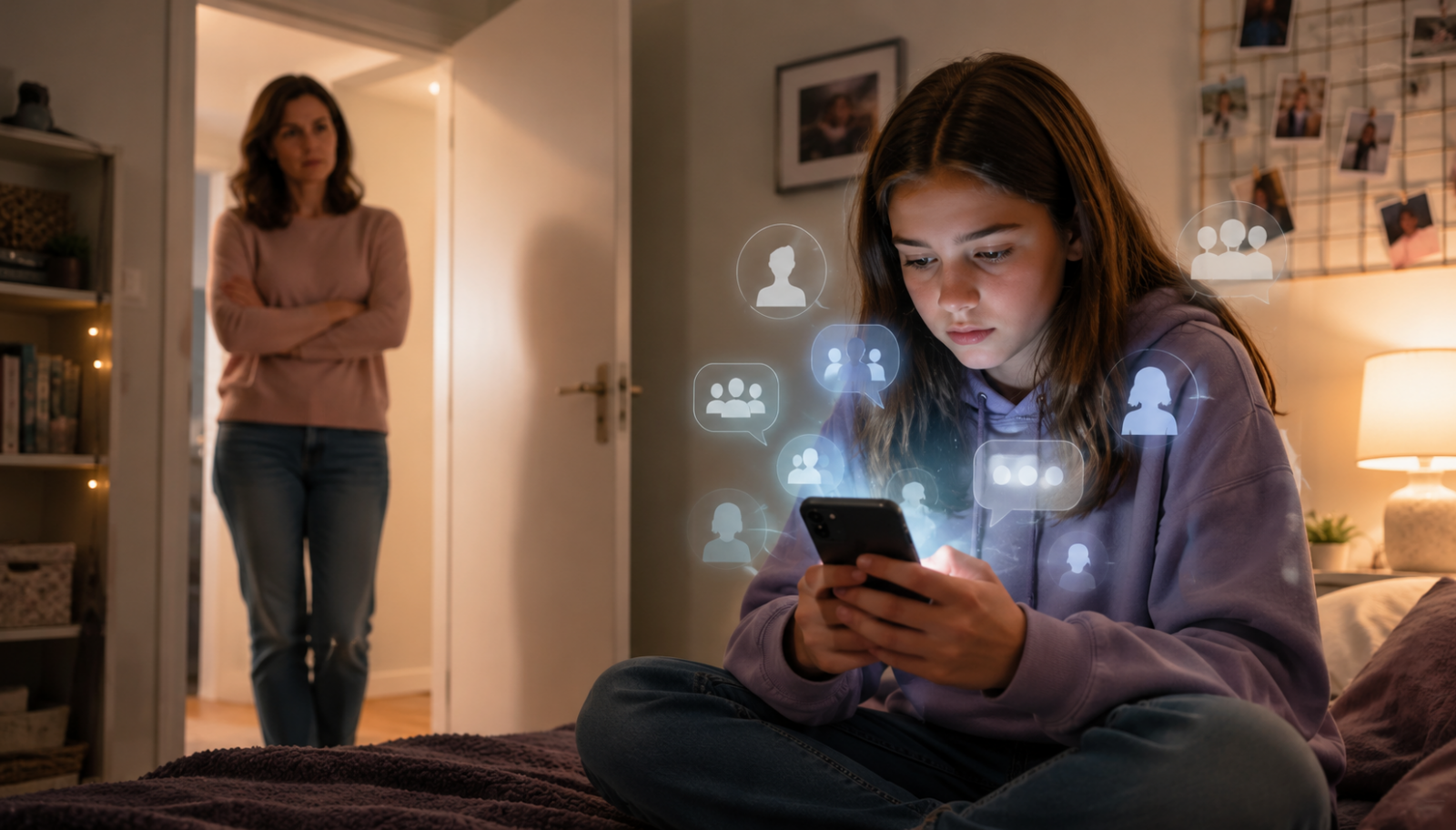
Most stranger contact shows up in behaviour before it shows up in technology. A child who is managing a new relationship with an unknown adult often changes how they use their phone, how open they are about it, and how they respond when you ask questions. These are the specific signs worth watching for.
- Increased secrecy about the phone. If a child who used to leave their phone lying around now closes apps when you come near or gets visibly anxious when you pick it up, that change is worth paying attention to.
- New gifts, money or items you didn't provide. An adult who has established contact with a child will sometimes send gifts, game credits, money transfers or items as a way of building a sense of obligation and intimacy. Unexplained presents or credits are a serious warning sign.
- Emotional withdrawal or secretiveness. A child who is managing a secret relationship, particularly one they've been told to keep private, may seem more emotionally distant, less communicative or evasive about how they're feeling.
- Using the phone at unusual hours. Grooming conversations often escalate late at night when a child is alone and a parent is less likely to notice. Late-night phone use, particularly involving messaging apps, combined with other warning signs is significant.
- Mentioning a new ‘friend' you've never met and can't place. This is the signal I'd act on fastest. If your child mentions someone online who doesn't connect to their school, sports team or friend group, asking ‘who is this and how did you meet them?' is not overreacting. It's exactly the right question.
- Switching off or becoming defensive when you ask about their phone. A child who reacts to ordinary questions about their online activity with disproportionate anxiety or defensiveness may be protecting a conversation they don't want you to see.
- Changes in mood after being on their phone. Not every mood change after phone use is related to stranger contact, but a pattern of anxiety, upset or agitation connected specifically to messaging activity is worth paying attention to.
- Being sent to another platform. If a child mentions being asked to move a conversation from one platform to WhatsApp, Snapchat, Signal or Telegram, that's a red flag. The move to a private messaging platform is a deliberate step by someone who doesn't want to be visible on a more open platform.
Digital and Device Warning Signs
Alongside behavioural signals, there are things you may notice if you have any visibility into the device or its contents. These tend to appear later than the behavioural signals, but they're more specific and harder to explain away.
- A contact or username in their messaging apps you don't recognise and they can't easily explain
- Messages that have been deleted before you see them
- A new or hidden app they didn't have before, especially a messaging or communication app
- Screen time showing usage on an app at times the child should have been asleep
- A secondary social media account you weren't aware of
- Searches or browser history involving adult topics, platforms or content that feels out of character
How Online Grooming Works: The Pattern Parents Need to Understand
Understanding the grooming pattern is one of the most useful things you can know as a parent, because it explains why children so often don't realise something is wrong until they're already in deep. Grooming doesn't feel like grooming. It feels like a new friendship. When I think about explaining this to my nieces and nephews, the framing I'd use is this. Attention from someone you don't know in real life that feels exciting and special is worth noticing, not because it's definitely dangerous, but because that feeling of being specially chosen is exactly what the early stages of unsafe contact are designed to produce.
The pattern typically follows recognisable stages, though the speed varies a lot. In some cases this takes weeks. In others it can happen in days. The platform affects the form, but the underlying progression is consistent across most cases that child protection organisations and police have documented.
- Initial contact and targeting. The contact starts on a platform where the child has some visibility, through a comment, a like, a follow, a game friend request or a group chat. The person selects children who seem socially isolated, who share a lot of personal content, who express unhappiness or who respond enthusiastically to positive attention.
- Friendship building. The contact focuses on shared interests, compliments and making the child feel understood, special or seen in a way they don't feel elsewhere. This phase can last days or weeks. Nothing about it feels dangerous, which is why children often don't mention it to a parent.
- Exclusivity and secrecy. The person begins to encourage the child to keep the friendship private. ‘Your parents wouldn't understand us' or ‘This is our thing' are common framings. At this point the child is often moved from the original platform to a private messaging app like WhatsApp, Snapchat, Signal or Telegram, specifically because those platforms are harder for a parent to see. The move to a private app is one of the most important warning signs.
- Desensitisation. The person gradually introduces more personal topics, sexual content or requests for images, framing each step as normal or as a test of trust. Disappearing messages are often used here to lower a child's guard and reduce the evidence of what's been exchanged.
- Coercion or exploitation. Once images or personal information have been shared, the relationship may shift to sextortion, blackmail or further coercion. At this stage many children feel trapped and don't know how to tell a trusted adult without believing they'll be in serious trouble.
NCMEC has reported that AI tools are being used to simulate grooming conversations at scale, allowing a single offender to run contact with hundreds of children simultaneously using AI chatbots that adapt to each child's messages and build trust over weeks. NSPCC data shows that online grooming offences reached record levels in 2023 to 24, with over 7,000 sexual communication with a child offences recorded by UK police, up 89% since 2017. Almost half of those cases, where the platform was known, involved Snapchat. The point at which I'd act is the move to a private messaging app. Moving a conversation from a visible platform to WhatsApp, Snapchat, Signal or Telegram is the clearest sign that someone is deliberately trying to get out of a parent's line of sight. It's the point I'd treat as a hard stop in any conversation about who a child is talking to online. The CEOP Safety Centre and the NCMEC both provide resources for parents and children on recognising and reporting grooming, and NSPCC data has consistently identified online grooming via private messaging as one of the most significant child protection concerns in the UK.
Where Stranger Contact Most Commonly Starts by Platform
The growing movement to restrict children's access to social media, most significantly Australia's ban on social media for under-16s in December 2025 and similar legislation moving through the UK, France and Norway, reflects official recognition that the contact risk is real and platforms haven't adequately addressed it. But age restrictions on social media accounts don't cover gaming platforms, messaging apps or the many other spaces where stranger contact commonly begins. The risk hasn't been legislated away. It's been partly displaced.
Contact risk isn't evenly spread across platforms. Knowing which ones are most commonly involved helps parents prioritise where to set controls, where to have conversations, and what to watch for on the specific apps their child uses.
TikTok Comments and Lives
TikTok comments on public videos are visible to anyone and are one of the most common starting points for unwanted contact. A child with a public TikTok account is also making their images available as raw material for AI tools that can create fake profiles or deepfake content using publicly visible photos. A comment on a child's video, or a comment a child leaves on someone else's, can be the opening. TikTok Lives create a more direct contact environment where a child is visible and interacting in real time with anyone watching. Using TikTok's privacy, comment and live controls can reduce several of these contact routes.
Snapchat Friend Requests and Messages
Snapchat's friend recommendation system can surface a child's account to people outside their existing network. A friend request from someone they don't know in real life, followed by a message, is a very common first contact pattern on Snapchat. The platform's disappearing message feature makes it particularly valuable to someone who wants to communicate without leaving a record. Making sure your child's Snapchat account is set to friends only and that Snapchat Family Center is active closes several of the common contact routes.
Instagram DMs and Comments
Instagram DMs from unknown accounts, and comments on posts, are a common starting point. A public Instagram account makes a child visible to anyone. Even a private account can receive follower requests from people with convincing fake profiles. Once followed, DMs open. Switching to a private account and enabling Instagram's Teen Account protections limits who can send DMs to people your child doesn't already follow.
Gaming Platforms and Discord
Gaming is one of the most common environments for initial contact between children and unknown adults. Voice chat in multiplayer games, friend requests through gaming platforms, and Discord servers linked to games all create contact opportunities that parents often don't monitor. A child who accepts a friend request in a game and then accepts an invitation to a private Discord server has moved into a space that's very difficult for a parent to see into, which is why device-level parental controls need to cover games, browsers and communication apps rather than one platform alone.
YouTube Comments
A child who comments on YouTube videos is publicly visible. Grooming attempts have been documented in comment sections of child popular creator channels, where an adult replies to a child's comment and moves the conversation to a private message or another platform. If a child creates their own YouTube content, the risk increases significantly because their face, voice and channel are visible to anyone who watches. If your child creates content on YouTube, turning off comments and tightening the account settings is the most effective step you can take.
How To Talk to Your Child
A calm, direct conversation about online safety is the most effective response to warning signs. It's also the hardest to get right. The instinct is to say ‘I've been checking your phone.' The approach that actually gets you answers is ‘I've been worried about you and want to check in.' They sound similar but get completely different responses.
Start from curiosity rather than accusation. ‘I've noticed you've seemed a bit different lately, and I want to check in' opens the conversation better than ‘I've been looking at your phone.' Even if you have been looking at their phone, leading with that can shut a child down immediately.
Ask open questions. ‘Is there anyone online you talk to that I don't know?' ‘Has anyone ever asked you to do something online that made you feel uncomfortable?' ‘Do you know that you can come to me about anything, even if you're worried you'll get in trouble?' These questions give a child permission to tell you without feeling like they're confessing.
Make clear that coming to you isn't getting in trouble. Children often stay silent about unsafe contact because they're scared of losing the phone, being blamed or making things worse. Knowing that they can tell you without those consequences matters enormously.
What To Do If You're Worried
Act quickly if you believe your child is in contact with someone who may be grooming or exploiting them, because contacts and conversations can disappear fast. You don't have to deal with this alone, and the organisations listed below exist specifically to support families through it. But you don't need to have all the answers before you start. The steps below are in the order they matter, and there are organisations listed at the end who exist specifically to help families in this situation.
- Save evidence first. Screenshot or photograph any concerning conversations, accounts or messages before approaching your child or contacting the platform. Once a child knows you've seen something, they or the other person may delete it quickly.
- Report to the platform. Every major platform has a reporting function for accounts suspected of inappropriate contact with minors. Use it.
- Report to child protection authorities. In the UK, report to the CEOP Safety Centre, which is specifically designed to handle online child sexual exploitation and grooming. In the US, report to the NCMEC CyberTipline. Both have experience handling these situations and can advise on next steps.
- Contact the police if there's immediate risk. In the UK call 999. In the US call 911. If you believe a child is in immediate danger, don't wait for online reporting processes.
- Support your child without blame. A child who's been in contact with an unsafe adult is a victim, not a participant. As a parent, the instinct when you find out can be fear or anger that the child reads as blame. The response that keeps them talking to you, and keeps them safe, focuses entirely on their safety, not on how they ended up in the situation.
What To Do If Contact Has Already Happened
Contact having already happened doesn't mean it's too late to act. The first priority is to make clear to your child that they are not in trouble, and that you are on their side. A child who feels blamed or punished for contact they may not have understood was unsafe will stop talking, which is the worst possible outcome.
Before speaking to your child at length, gather what evidence you can. Screenshot any conversations, profiles, or accounts you have access to. Note the platform, the username, and any information the person shared about themselves. Save this before you do anything else, because contact, profiles and accounts can disappear quickly once a child is warned or a complaint is made.
Then report. In the UK, report to the CEOP Safety Centre, which is specifically set up for online child sexual exploitation and grooming cases. In the US, report to the NCMEC CyberTipline. Both organisations have experience with these situations and can advise on next steps, including whether to contact local police.
If there's any possibility of immediate risk, contact the police directly. In the UK call 999. In the US call 911. The NSPCC helpline (0808 800 5000 in the UK) can also advise parents who aren't sure whether a situation is serious enough to report formally.
After reporting, get support for your child. The NSPCC and Childline (0800 1111 in the UK) provide confidential support for young people affected by grooming and exploitation. In the US, NCMEC's Child Victim Identification Program can connect families with local support services.
How Parental Controls and Monitoring Can Help
Built-in parental controls on social media can reduce exposure risk by limiting which platforms a child can access, who can contact them and what content they can see. They can't tell you about contact that's already happening on a platform that's allowed, or on a device that isn't supervised. This is the gap that monitoring tools are specifically designed to fill, and if stranger contact is the specific worry, it's the visibility into message content and unknown contacts that matters most.
If you're worried about stranger contact and the standard controls aren't giving you enough visibility, a dedicated monitoring tool may help. Before using one, understand the difference between a parental monitoring app and stalkerware. These tools work at device level and can show message content, contact lists, deleted messages and social media activity across platforms.
Compare mSpy, uMobix and Eyezy for visibility into messaging and social media activity. For wider household and family online protection, Aura covers identity, scams and multi device safety. The best social media monitoring tools for parents go much further than standard device controls, while the best parental control apps are more useful when the priority is blocking access, setting limits and closing workarounds. Choosing the right parental control app means matching that level of visibility to the concern rather than defaulting to the most intrusive option.
Nicks' take as a parent
The thing that stays with me from testing monitoring tools across platforms is how normal unsafe contact can look in the early stages. A friendly comment, a DM complimenting a post, a follower request from someone who shares a child's interests. The escalation is gradual and the early stages can look completely benign. The parents who catch it early tend to be the ones who are already in the habit of asking about their child's online life as a normal conversation, not just when something has already gone wrong.
Nick Francis, DSS parental controls tester
