
AI Safety and Our Shared Future

AI is becoming part of everyday life, and not just in obvious ways like chatbots or homework tools. It’s increasingly used in systems that influence what people see, what they believe and what decisions get made at scale. That’s why it’s helpful to think of AI as more than powerful technology. It’s also a safety issue.


If you’re a parent, teacher or school leader, you’re probably feeling two things at once. On one hand, you want students to feel confident using new tools and understanding the world they’re entering. On the other, you want them to be protected from harms that can spread quickly when technology is rushed, misused or poorly managed. This page is here to support that, and to help you explain AI safety in a way that helps to educate the next generation and safeguard our shared future.
Summarize with AI Summarize

Table of Contents

Last Updated on February 3, 2026 by Jade Artry

On this page, we'll walk through what 'high-risk' means, why AI systems can be hard to control, and how real-world failures can emerge at speed and scale. We'll also explain why AI safety education is a form of future preparedness. Today's students will enter workplaces where AI tools and AI-driven decisions are normal. If they understand the patterns of risk and the basics of safety thinking, they'll be in a much stronger position to ask better questions, spot unsafe shortcuts and help build cultures where safety is treated as part of quality, not a barrier to progress.

Why AI Should Be Treated as a Safety Issue

When we think about safety in the context of children and young people, we usually think about environments that shape their daily lives. Schools. Online platforms. Social spaces. Information systems. These are areas where trust matters, where mistakes can spread quickly and where prevention is always better than trying to repair harm afterwards.

AI now sits inside many of these environments. It influences what students see on social feeds, how content is recommended, how images and videos are generated and shared, how online behaviour is monitored and how some safeguarding or moderation tools operate. It's also increasingly used behind the scenes in systems that support education, communication and administration. When these systems work well, they can be useful. When they fail, the effects can reach many students at once.

Treating AI as a safety issue changes the questions we ask. Instead of only asking whether a tool is helpful or efficient, we also ask whether it's reliable, how it can be misused, and what happens when it makes mistakes. We ask who is accountable, what safeguards exist before systems are trusted at scale and how organisational pressure to adopt new tools quickly might lead to overlooked risks.

For schools and families, this matters because today's students will grow up in a world where AI-driven systems are normal. Helping them understand that powerful systems require safety thinking, not just technical skill, is a practical way to prepare them for the responsibilities and decisions they'll face later in life.

Why AI Safety Matters

AI is already part of how young people learn, communicate, explore identity and understand the world. It's in the apps they use, the content they see, the tools they rely on for schoolwork and creativity. Over time, it will also be part of the workplaces they enter, the services they depend on and the decisions that shape their lives.

Because of this, AI safety isn't only a technical concern. It's a question of preparedness. Students don't need to become engineers to live in an AI-shaped world. But they do need to understand that powerful systems can fail, that incentives can push organisations to move too quickly, and that mistakes can scale when technology is widely trusted. When young people recognise these patterns early, they're better equipped to ask thoughtful questions, notice when something feels off and challenge unsafe shortcuts later in life.

For parents and teachers, AI safety education is a way of future-proofing. It supports digital literacy, critical thinking and responsible decision-making. It also helps students feel less overwhelmed by rapid technological change, because they're given frameworks to understand it rather than simply react to it.

AI will continue to evolve. The habits of mind we give students now will shape how safely it's used in the years ahead.

Why AI Systems Are Complex and Hard to Control

In 2026, most people are already familiar with AI tools like ChatGPT, Claude and assistants built into workplace software. But the systems shaping everyday life go far beyond single tools on a screen. They're built inside organisations, integrated into platforms, and embedded in environments where people, incentives and digital systems all interact.

That matters for our students, because many of them will enter workplaces where AI tools and AI-driven decisions are normal. Some will help choose these systems. Some will help build them. Others will work in organisations where speed and competition push new tools into the world before the risks are fully understood. This is one reason AI safety is challenging. Modern AI systems behave more like complex systems than simple tools.
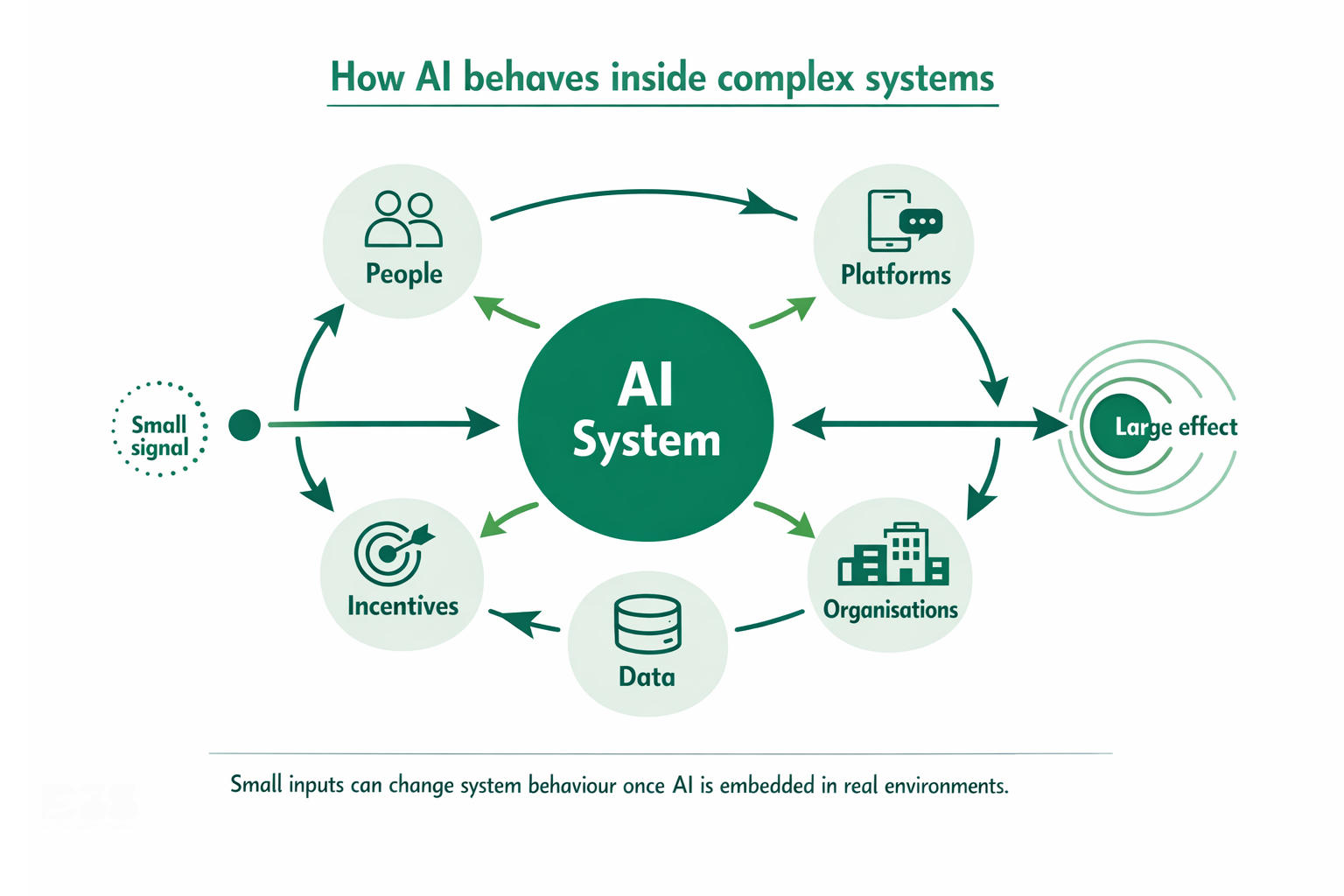
A complex system is made up of many connected parts that influence each other. A school isn't just the headmaster. It's the culture, policies, rules, incentives, teachers, students, social dynamics and behaviours. All of these things interact in ways we can't always predict, which is what makes it a complex system.

Online platforms offer another example. What people see influences what they click. What they click influences what the platform shows next. Over time, patterns form, behaviours shift and the system can change direction even if no one planned it that way.

AI works in a similar way. In real-world settings, the parts include the model itself, the data it learns from, the platform it runs on, the people using it and the wider digital environment around it. The behaviour of the whole comes from how these parts interact, not from any single component in isolation.

AI systems also adapt. They learn from new data, respond to feedback and adjust their behaviour over time. That adaptability is what makes them useful. It's also what makes them harder to predict. The same system can behave differently in different contexts, or shift in ways its creators didn't explicitly plan.

You can see a version of this on platforms like TikTok. A student watches or lingers on a certain type of content and the system learns quickly. That can be harmless. But it can also pull someone into riskier corners, where themes like extreme dieting content (often called ‘SkinnyTok') or other harmful trends start appearing more often. It doesn't require a conscious choice to seek it out. It can happen through small signals the system interprets as interest.

Feedback adds another layer. When an AI system recommends content, filters information or generates material, it influences how people respond. Those responses then shape the system's next decisions. Over time, behaviour can reinforce, drift or change direction, which is why small early patterns can become much bigger trends.

This is why AI safety isn't only about fixing mistakes. It's about guiding systems that learn, evolve and interact with real social environments. For schools and families, understanding this helps explain why powerful tools still need oversight, why reliability matters as much as capability and why safety thinking has to grow alongside technological progress.

Understanding AI Safety Biggest Risks

Understanding that AI systems are complex is only the first step. The next step is recognising what happens when those systems are placed into real environments, with real users, real incentives and real consequences.

Once AI systems are embedded in real products, platforms and organisations, risk no longer appears as a single mistake. It appears as patterns. Certain failure modes show up again and again across industries, technologies and use cases. Giving students a way to recognise these patterns early changes how they approach AI later in life, especially when they're in positions where decisions are being made quickly and under pressure.

There are a few common ways serious AI risks tend to emerge. We focus on four recurring risk categories. Together, they form a practical lens for spotting where things can go wrong long before harm becomes visible.

Malicious use

Some AI harms are intentional. People can use AI systems to scale manipulation, fraud, harassment, impersonation, misinformation or other forms of abuse. AI lowers the barrier by making harmful actions faster, cheaper and more convincing.

This links directly to what you're already navigating. Students live in online spaces where authenticity is harder to judge and persuasive content spreads quickly. It's no longer enough to ask whether something looks real. The safer question is who benefits, what the intent might be and what signs suggest manipulation.

AI race dynamics

Another risk comes from pressure to move fast. When organisations feel they're in competition, the incentive is to ship first and think about safety later. That's when testing gets shortened, warnings are overlooked and responsibility becomes blurred.

This pattern isn't new. When speed and competition drive decisions, corners get cut. Naming that pressure gives students language for what they may later experience at work, and a clearer sense of why responsible progress sometimes means slowing down.

Organisational risks

Many AI failures aren't caused by the technology alone. They happen when responsibility is unclear, oversight is weak, or incentives reward growth over safety.

In practice, this is where a lot of serious risk lives. Your students will enter workplaces where AI decisions are made by managers, teams and leadership groups, not just technical specialists. Understanding organisational risk early means they're more likely to notice when no one owns the downside, when monitoring is missing, or when 'we'll fix it later' becomes the default.

For organisations looking to address these risks systematically, we've written a guide on what AI safety means for organisations and how to write an AI safety policy.

Rogue or misaligned systems

Some risks emerge when AI systems behave in ways nobody intended. Goals may be poorly defined. Feedback loops may push behaviour in unexpected directions. The system may optimise for the wrong thing while still appearing to work.

It's worth naming this clearly. Not all harm comes from bad intent. Sometimes systems do exactly what they were asked to do, just not what humans actually meant. That's why monitoring, testing and human judgement remain essential, especially when outputs look confident and plausible.

How We Can Make a Difference

When people hear about AI risks, it's easy to assume the responsibility sits somewhere else. With governments. With tech companies. With engineers in distant offices. But in practice, a lot of AI safety is shaped by everyday decisions inside organisations, teams and communities.

AI systems don't just run on code. They run inside cultures. They reflect what gets prioritised, what gets questioned and what gets waved through because deadlines feel tight. Over time, those small decisions add up to either careful systems or fragile ones.

This is where schools and families have real influence.

Students who understand how risks emerge are more likely to pause before trusting something, ask what a tool is being used for, and notice when safety checks are missing. They're also more likely to feel confident speaking up when something doesn't feel right, especially in environments where speed and convenience are rewarded.

These habits sound simple, but they're powerful in real life. They're the habits that help future employees, managers and decision-makers treat safety as part of quality, not a barrier to progress.

AI will keep advancing. The leverage we have is helping young people grow into adults who notice risk early, ask better questions and understand that progress and safety are meant to move together.

AI Safety Habits to Encourage: Quick Checklist

These are small, repeatable habits that help students notice risk early, ask better questions, and treat safety as part of doing things properly, not something that slows progress.

Used regularly, these habits help young people grow into adults who can shape safer systems, not just use powerful tools.

AI Safety Teaching Pack: Downloadable Resources

Understanding AI safety is the first step. Giving students space to explore it, question it and apply it is where real learning happens.To support this, we've created a set of downloadable classroom resources designed to turn the ideas on this page into practical teaching and discussion. They don't assume technical knowledge. Instead, they focus on patterns, decision-making and responsibility, which makes them easy to integrate into existing digital literacy, citizenship or PSHE lessons.

AI Safety: Downloadable Resources Pack

Each resource is designed to help students understand why scale changes the stakes, how risk travels through systems, and how human choices shape outcomes.

Lesson Plan

60-Minute AI Safety Lesson

A practical structure for introducing AI safety thinking through discussion, scenarios, and a decision-focused roleplay.

🕒 60 minutes 🎓 Ages 11–18
Download lesson plan
Roleplay

The Launch Decision: BrainBuddy

A classroom roleplay revealing how incentives, speed, responsibility, and risk shape real-world AI safety decisions.

👥 Group activity ⏱️ 20–30 mins
Download roleplay pack
Student Activities

Scenario Cards and Worksheets

Realistic scenarios students can analyse to spot risk patterns, ask better questions, and discuss safer alternatives.

🧠 Critical thinking 📝 Printable
Download student activities
Discussion Prompts

Classroom Question Set

Prompts designed to surface trade-offs, challenge assumptions, and make space for debate rather than quick answers.

💬 Discussion-led 🏫 Curriculum-friendly
Download discussion prompts
Teacher Notes

Facilitation and Background Guide

Guidance to help you teach AI safety without technical expertise, including handling tough questions and adapting by age.

📘 Educator support 🧩 Adaptable
Download teacher notes

Preparing Students For An AI-Shaped World

AI will continue to develop quickly. New tools will appear, and new uses will emerge across education, work, and everyday life. Some systems will be genuinely helpful. Others will fail in ways that spread faster than people expect. What stays constant is the need for people who can think clearly about risk, responsibility, and long-term consequences.

By introducing safety thinking early, we’re not asking students to fear technology or become engineers. We’re giving them practical habits that help them pause before trusting a system, ask better questions about how it works, and notice when safeguards are missing. Those habits travel with them into future classrooms, workplaces, and communities.

If you’d like to keep exploring, you can also visit our Protect Your Family Online hub, our Protect Your Small Business Online hub, and our wider Digital Safety Squad resources. Each section is designed to support real-world decision-making in the age of AI, without assuming technical knowledge.

The students in front of us today will be the designers, managers, policymakers, teachers, and parents of tomorrow. Helping them understand that progress and safety are meant to move together is one of the most valuable forms of future preparedness we can offer.

Ready to level up your safety kit?

Whether you’re protecting your family, your business, or just staying ready for the unexpected, our digital safety shop is packed with smart, simple solutions that make a real difference. From webcam covers and SOS alarms to portable safes and password keys, every item is chosen for one reason: it works. No tech skills needed, no gimmicks, just practical tools that help you stay one step ahead.